Forex Trading for Beginners
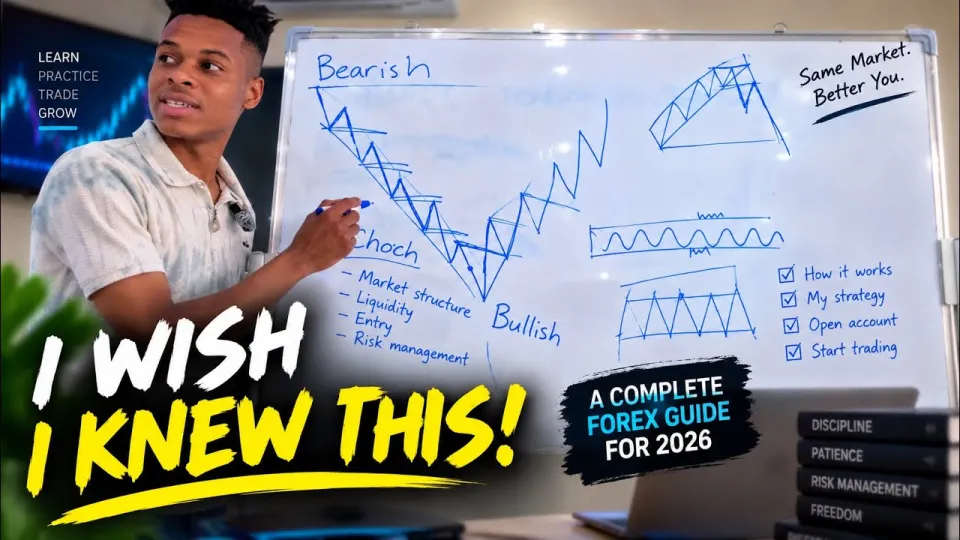
Video: How To Start Forex Trading For Beginners in 2026 (Full Guide + My Strategy)
Need articles like this for your video? They help promote it on YouTube and Google — order them in the Telegram bot @sat_sit_bot. The bot writes and publishes the articles itself (with your YouTube video embedded) on popular topical websites (no ads). Your first 50 articles are free.
Forex trading is the buying and selling of currency pairs on the foreign exchange market, where the value of one currency is quoted against another. For beginners, starting with forex means learning market structure, opening a demo account, and practicing a simple strategy with strict risk control. This guide distills the core lessons from Carl Fx's full beginner walkthrough, so you can begin without guesswork.
To open a live account with the broker featured in the video, use the TFC Global Markets registration link (note: the channel owner discloses ownership of this brokerage).
How the Forex Market Works
Forex is an over-the-counter market where currencies are traded in pairs, and prices fluctuate based on supply and demand, interest rates, and economic news. Unlike stocks, forex trades 24 hours a day, five days a week, across major financial centers. The most traded pairs include EUR/USD, USD/JPY, and GBP/USD. Movements are measured in pips (percentage in point), and leverage allows traders to control larger positions with smaller capital—but leverage also amplifies losses. Beginners should understand that forex is not a get-rich-quick scheme; it requires education and discipline.
Getting Started from Zero
To start forex trading, you need a trading account, a trading platform (like MetaTrader 4 or 5), and a clear plan. First, choose a regulated broker. Carl Fx recommends TFC Global Markets, but always check regulation and read reviews. Next, open a demo account to practice without real money. Many beginners, as seen in the comments, wisely start with a demo to build confidence. Fund your live account only after you have a consistent strategy and risk management rules. Remember, trading is a skill—expect to spend months learning before risking significant capital.
Understanding Bullish and Bearish Markets
A bullish market is characterized by rising prices, where buyers dominate and higher highs and higher lows form. A bearish market sees falling prices, with lower highs and lower lows as sellers take control. Identifying the prevailing trend is crucial because trading with the trend increases the probability of success. Use higher timeframes (like daily or 4-hour charts) to determine the overall direction, then look for entries on lower timeframes. Carl Fx emphasizes that market structure—the pattern of highs and lows—is the foundation of price action analysis.
Market Structure and Price Action
Market structure refers to the sequence of swing highs and swing lows that reveal the market's direction. In an uptrend, price makes higher highs and higher lows; in a downtrend, lower highs and lower lows. A break of structure (e.g., a lower low in an uptrend) signals a potential reversal. Price action trading focuses on candlestick patterns, support/resistance levels, and trendlines. For example, a bullish engulfing candle at a support level in an uptrend can be a buy signal. Mastering these concepts takes practice, but they form the basis of most trading strategies.
A Simple Trading Strategy for Beginners
Carl Fx shares a straightforward strategy that combines market structure and price action. Here's a step-by-step breakdown:
- Identify the trend on a higher timeframe (e.g., 4-hour). If price is making higher highs and higher lows, look for buying opportunities.
- On a lower timeframe (e.g., 15-minute), wait for a pullback to a key support level (e.g., previous swing low or moving average).
- Look for a bullish reversal candlestick pattern (like a pin bar or engulfing) at that support.
- Enter the trade after the candle closes, placing a stop-loss below the recent swing low.
- Set a take-profit at the next resistance level or use a risk-reward ratio of at least 1:2.
- Risk no more than 1-2% of your account per trade.
This strategy is simple but requires discipline and backtesting. Practice on a demo account until you can execute it consistently.
Common Mistakes Traders Should Avoid
Many beginners fail because they overtrade, risk too much per trade, or let emotions drive decisions. Avoid trading without a stop-loss, chasing losses, and using money you can't afford to lose. Carl Fx stresses that trading is about learning, being disciplined, and managing risk—not getting rich overnight. Another mistake is switching strategies too often; stick to one approach and refine it. Also, be wary of signals and "guaranteed" profits—there are no shortcuts.
Addressing Viewer Questions and Concerns
Viewers often ask about opening a real account and grasping the concepts. One commenter said they find it hard to understand; the key is to start with a demo, study market structure, and practice one strategy at a time. Another viewer asked for chart examples—Carl Fx's video includes visual walkthroughs, but you can also practice identifying patterns on historical charts. Some are ready to start this week; remember to begin with a demo and only go live when you have a proven plan. The journey requires patience, but with dedication, it's achievable.
Useful Links
- Open a trading account with TFC Global Markets (referral link; Carl Fx owns this brokerage)
- Join Carl Fx's free Telegram community
Final Thoughts
Forex trading offers opportunities but demands respect for risk. Start with education, practice on a demo, and keep risk per trade low. Carl Fx's beginner guide provides a solid foundation, but your success depends on discipline and continuous learning. For more insights, subscribe to Carl Fx's channel. Ready to take the next step? Register with TFC Global Markets and start your journey today.
Key takeaways
- Forex is a decentralized market where currencies are traded in pairs; daily volume exceeds $7 trillion.
- Beginners should start with a demo account to practice without risking real money.
- Understanding market structure (trends, support/resistance) is key to reading price action.
- A simple strategy: trade with the trend, use stop-loss, and risk no more than 1-2% per trade.
- Choose a regulated broker; Carl Fx promotes TFC Global Markets via his referral link.
Source: How To Start Forex Trading For Beginners in 2026 (Full Guide + My Strategy) · Markdown version
Questions & answers
How much money do I need to start forex trading?
You can start with as little as $50–$100 with a micro account, but it's recommended to begin with a demo account to practice. Focus on learning first; don't risk money you can't afford to lose.
Is forex trading profitable for beginners?
It can be, but most beginners lose money initially. Profitability comes from disciplined risk management, a proven strategy, and experience. Treat it as a skill that takes time to develop.
How long does it take to learn forex trading?
Expect to spend several months learning and practicing on a demo account before going live. Consistency and backtesting are key; some take longer, depending on dedication.
What is the best strategy for a beginner?
A simple trend-following strategy with clear entry and exit rules, such as trading pullbacks in the direction of the higher timeframe trend, is often recommended. Always use a stop-loss and risk no more than 1-2% per trade.